
Last year, we undertook our first Double Materiality Assessment (DMA), marking a significant step in strengthening how we identify and prioritise ESG issues most important to our stakeholders and organisation. This assessment reaffirmed the continued importance of our core priorities, including water quality, climate resilience, freshwater stewardship and transparency, and provided a strong foundation for our strategy and targets to 2030 and beyond. This assessment was reviewed during the year and remains current. Full details of the methodology and results of our DMA are set out in the Annual Report and Accounts 2025.
During the year, we have continued to embed the outcomes of the DMA across our decision-making, risk management and disclosures, ensuring our approach reflects stakeholder expectations and evolving regulatory requirements. This supports delivery of our strategic priorities, including driving environmental gains and progressing towards Net Zero.
The following Materiality Matrix presents the quantitative results of our double materiality assessment (DMA), highlighting the ESG topics that stakeholders consider most material. The matrix visualises each topic based on two dimensions: impact materiality (Y-axis), reflecting the significance of Pennon Group’s impact on people and the environment, and financial materiality (X-axis), indicating the potential influence of each topic on our business operations and financial performance. Topics are colour-coded and listed below by Environmental, Social, and Governance (E, S, G) themes to provide a clear and structured view of our priority areas.
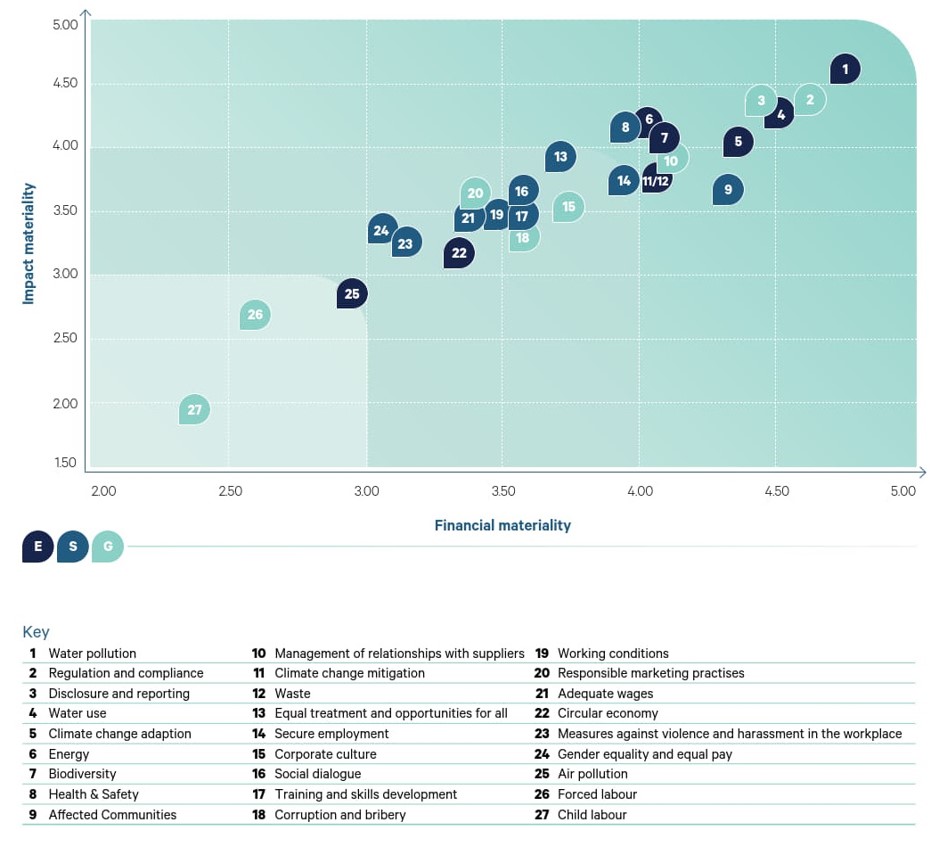
The results of our Double Materiality Assessment continue to highlight priority topics centred on water quality, climate resilience, biodiversity and regulatory compliance, reflecting the key risks and responsibilities inherent to our sector.
These insights remain integral to how we operate and directly inform delivery of the strategic priorities set out in our 2025–2030 Business Plan, including our focus on driving environmental gains, strengthening resilience and improving outcomes for customers and communities.
During 2025/26, the assessment has continued to support decision making, investment prioritisation and performance monitoring across the Group, ensuring that our ESG approach remains aligned to the areas of greatest impact to both our business and the wider environment.
This ongoing integration provides a clear and robust basis for prioritisation, governance and continuous improvement across our operations.