
We are part of the communities we serve, with around 4,000 colleagues living and working locally. We care deeply about the places we call home and are passionate about sustaining and improving them, for our customers, our families and our friends. Through this strong local presence, we actively engage with communities to ensure people have a meaningful voice in shaping the services we provide and the environmental outcomes that matter most to them. We are woven into the everyday lives of communities across the region. By listening regularly and responding with care, we can better understand local needs and deliver services that protect water, support wellbeing, and safeguard the environment today and for generations to come. Our charitable donations and Better Futures Fund support hundreds of amazing causes, from water conservation to education and environmental restoration, making a real difference to peoples’ lives and the places they love. Our education programme inspires future champions across the region to learn about the value of water in fun and interactive ways. Our outreach teams work directly in the communities we serve, offering support to those who need it most and having honest conversations about the environmental challenges we face together. We don’t just talk about sustainability, we act on it. For over a decade, we have partnered with local organisations to deliver nature-based solutions, including working with farmers to adopt sustainable practices and planting trees to protect water quality. We have also restored vital peatlands to boost biodiversity and reduce runoff into rivers and streams. Our charity partnerships open up access to lakes and reservoirs, offering health and recreational benefits to thousands of people.
How we engage
Our Stakeholder Forums bring together thousands of stakeholders from across the region to review and develop plans with us. Our ‘Wheels of Engagement’ van, painted by a local artist, has become a familiar sight across the region. With over 50 visits, we can respond quickly to local needs, whether it’s a planned event or a live incident, giving us the flexibility to engage quickly when a particular need arises.
Case study - Our award-winning education centre in SES: Flow Zone
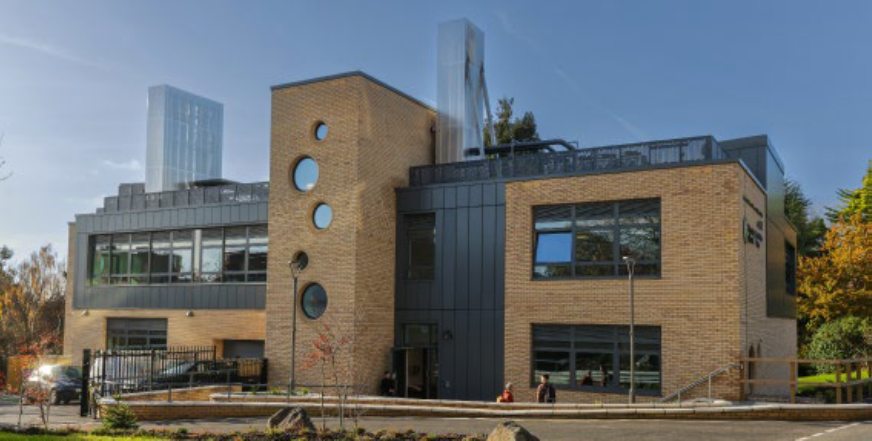
Flow Zone, our state‑of‑the‑art education centre at Bough Beech Reservoir, remains the cornerstone of our SES education programme. Led by former primary school teachers, the centre offers free, curriculum‑linked school visits from Year 3 onwards, supporting teachers to bring water, environmental and sustainability learning to life.
Throughout the year, Flow Zone has continued to demonstrate strong demand, high occupancy and consistently positive feedback from schools. In total, 5,478 pupils engaged with our education programme, with over 138 schools supported through on‑site visits and outreach activities, including school and nursery visits, Special Educational Needs (SEN) groups and hospital settings.
Now five years old, the centre has become a valued learning resource across Kent and the wider region. Interactive sessions are carefully aligned to the National Curriculum, focusing on topics such as the water cycle, potable water, water efficiency and responsible behaviours.
A typical visit begins in the Flow Zone classroom, where pupils explore the local geography, the journey of water and the history of the reservoir. This is followed by a guided walk through a tunnel beneath the reservoir itself, before a second‑stage tour of the water treatment works, allowing learners to see treatment processes first-hand.
Feedback consistently highlights the expertise of delivery staff, their ability to build rapport with pupils and adapt sessions for SEN groups, and the creation of memorable, practical learning experiences that reinforce classroom teaching.
In November 2025, Flow Zone’s Learning Outside the Classroom Quality Badge was successfully renewed, reflecting nationally recognised standards of quality endorsed by the Department for Education. Since 2025, the centre has also worked closely with the National Autistic Society to develop as an Autistic Friendly Setting.
Supported by community engagement and promotional activity, Flow Zone continues to play a key role in instilling efficient water habits from an early age.

Case study - Better Futures Fund
We believe in supporting projects and charities in the places where we live and work, helping to build stronger communities. Our £5 million Better Futures Fund was launched in January 2025.
The fund includes £2.5 million for community groups involved with physical activity, education, health and wellbeing, and positive environmental impacts. Each brand was allocated a specific amount of funding based on customers served in that supply area.
The remaining £2.5 million will go towards alleviating hardship, in addition to the £200 million programme to help customers who need extra support or are struggling financially across the Pennon family. Better Futures will help to unlock opportunities and bring positive change to the communities we serve.
Case study - CREWW
We continue to address the longer-term challenges facing the water sector driven by climate change and population growth through our joint venture research partnership with University of Exeter, the Centre for Resilience in Environment, Water and Waste (CREWW).
We have committed £21 million of capital and research investment which will fund multiple academic schools across the University of Exeter, working alongside our subject matter experts to meet these challenges.
Ranging from harnessing the power of AI to reduce the risk of groundwater infiltration into our sewer network system to reduce the use of storm overflows, to investigating the prevalence of polyfluoroalkyl substances (PFAs) and microplastics in our drinking water and wastewater, we are using science to drive value for money for our customers and protect our environment.
This year, we have extended the reach of the partnership with the University of Exeter, building on the foundational work of academics focused on catchment management, natural processes, and naturebased solutions which dates back to 2006 through our pioneering partnership with the farming community (Upstream Thinking) to bring better water quality to the South West through a systems based approach.
We have introduced a research theme lead framework which partners academics in the schools of computer science, engineering, bioscience and social science with our subject matter experts to promote a holistic solutions-based approach. This framework is now integral to CREWW’s ways of working and has already contributed to the initiation of new multi-disciplinary research projects which also draw upon expertise and input from outside the CREWW partnership.
The CREWW Safe to Swim (S2S) Forums, held in September 2025 and March 2026, convened local water quality interest groups, water companies, internationally respected water industry-focused academics from Newcastle University and the University of Exeter, representatives from local government, national regulators, UKHSA and technology consultants responsible for advising the Paris Olympics Organising Committee on use of the Seine for events.
The S2S Forums facilitated discussion regarding improved methods for informing customers and visitors, empowering them to make well-informed decisions and helping to prevent unnecessary ‘not safe to swim’ alerts that negatively impact coastal communities economically. We will be launching research projects and discussions with regulators on the research themes identified in the forums, namely:
- Improving the current approach
To identify and develop methods for improving existing modelling systems which underpin water quality alerts. The focus will be tailoring alerts for specific bathing waters (local tides/marine topography) rather than the current global models. - Influencing behaviours
Working with local stakeholders to ensure the improved alert information is understood by bathing water users in terms of risk of illness and causes of risk. A risk-based approach will balance the safeguarding of bathing water user health with protecting coastal economies from blunt ‘yes/no’ unsafe to swim alerts. - Better science, better understanding of risk of illness
With the advances in science since the 1980’s (where the current bathing water regulation regime draws its scientific basis) this theme will review the current scientific approaches to identifying risk of illness to bathing water users.
We look forward to sharing the S2S initiative and the wider research programme with the International Water Industry at the 2026 IWA World Water Congress & Exhibition in October 2026 where multiple research projects have been selected by the IWA academic panel to be showcased.
Business for Social Impact (B4SI)
Since 2021, we have been working to better understand the impact we have through our community programmes, through the adoption of the well-established B4SI framework. In addition to providing consistency in how we measure our community activity, our aim is that through working with our community partners in applying the framework, we can better support projects and programmes that deliver the greatest impact aligned to our purpose. In 2025/26, we delivered over £1.2 million in additional community investment through our social programmes across the group, as assured by B4SI, Whilst also exceeding our target to increase social impact as measured using the number of organisations, where positive results were measured generated by our community investment. The full set of B4SI assured data can be found in our online ESG Databook.